
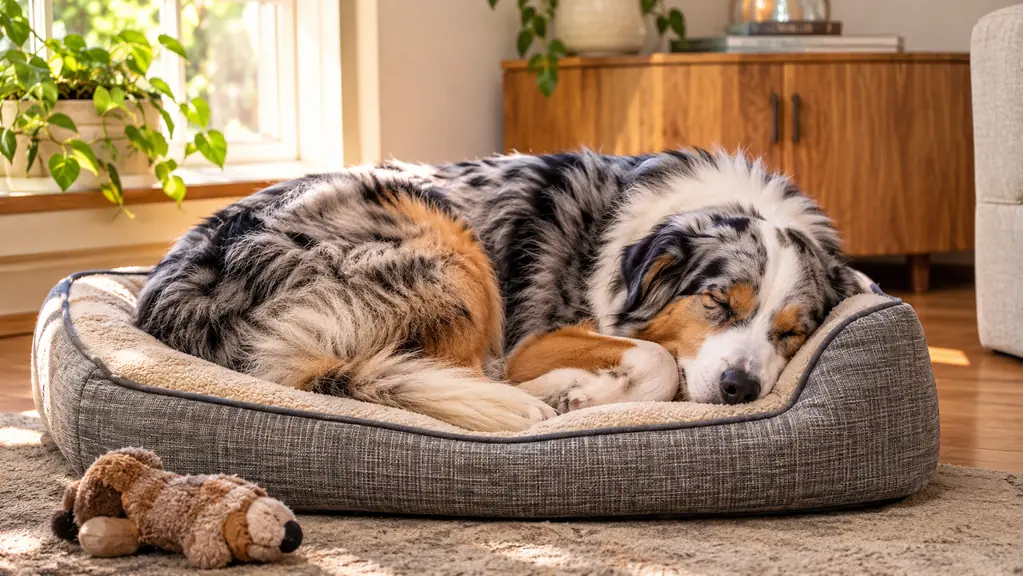
When you have spent thirty years on orthopedic floors, you learn to read a dog bed the way other people read a restaurant menu. I am Bernadette, and I did not buy the Bedsure orthopedic dog bed because a marketing email told me to. I bought it because my 12-year-old golden retriever mix, Juniper, started doing that slow, careful lowering onto the hardwood floor that breaks your heart if you know what it means. She was diagnosed with arthritis in both hips around age ten, and by last fall she would stand at the edge of her old bed, circle once, and walk away. That is the real reason most of us end up here, is it not? We are not shopping for a color or a brand. We are shopping for one more comfortable night for a dog who has given us all of hers.
So I ordered the Bedsure, sized for a large dog, and I kept a nurse's log for six months. I noted when she settled quickly and when she did not, how often she shifted at night, whether she limped more in the morning, and how the bed itself held up to a 64-pound dog, a cat named Pickles who has curled up on it a couple of times, and my own stubborn habit of washing everything on hot. This review is what nobody tells you before you buy: what the foam actually feels like, what the waterproof claim really means, and the one thing I nearly returned it over.
The Short Answer
The Bedsure orthopedic dog bed is a genuinely good bed for a stiff older dog, with one honest caveat about the bolster. For Juniper, the flat sleeping surface won immediately. She sleeps through the night more often than she did on her old bed, she gets up with noticeably less stiffness, and the cover has survived six months of washing without falling apart. But the raised sides are soft enough that a heavy dog flattens them, and if your dog likes to rest her head on a firm edge, this is not the bed for that.
The Quick Verdict
A comfortable, washable, well-made orthopedic bed for arthritic dogs who sleep sprawled out. Not ideal if your dog needs a firm bolster to rest her head on.
Amazon Check Today's Price →If your dog hesitates before lying down, this is the bed to try first
The Bedsure gave Juniper a flat, supportive surface she actually settles onto. Check today's price on Amazon and see if it helps your dog sleep through the night too.
Amazon Check Today's Price on Amazon →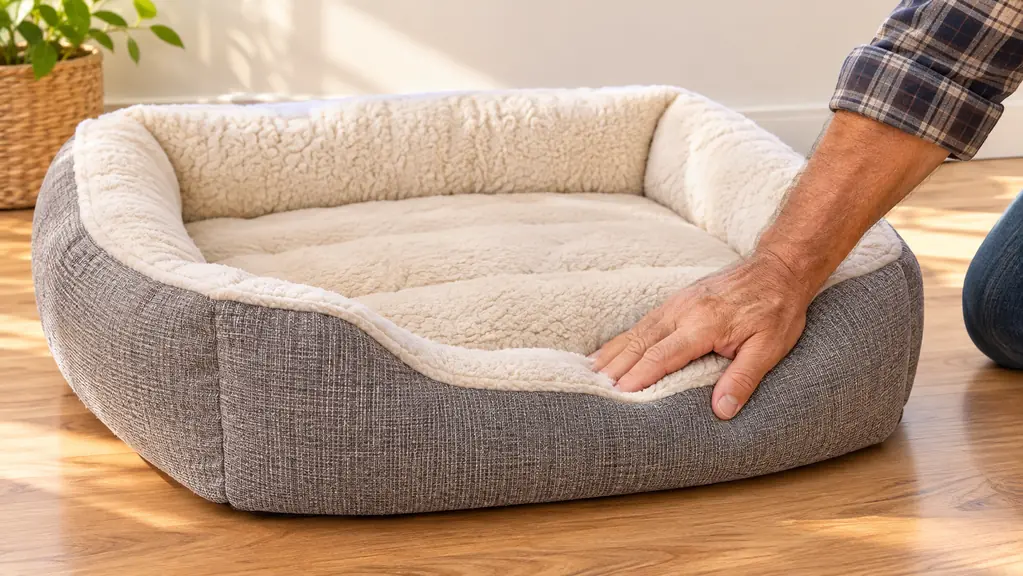
How I Tested It, the Way I Was Trained To
I did not test this bed the way a reviewer in a warehouse would. I tested it the way I used to assess a patient's pressure risk on the ward. For six months I kept a simple log. I wrote down how long Juniper took to settle after lying down, how many times she shifted position during the night, how stiff she was on the back porch steps in the morning, and whether she chose the Bedsure over the living room rug, which used to be her favorite spot. I also weighed the bed when I washed it, checked the foam after every dry, and watched how the cover held at the seams.
Juniper is a 64-pound golden retriever mix with arthritis in both hips, so she is exactly the dog this bed is marketed toward. She is not a delicate tester. She launches herself onto beds like she is still two years old, digs a circle with her front paws, and flops down with her full weight. If a bed cannot survive Juniper, it cannot survive much. Before I unboxed it, I measured the corner of the living room where I planned to put it. The listing gives the bed as 38 inches long, 28 inches wide, and 6.5 inches thick, and it fit the space I had cleared with room to spare. I also checked the weight, 6.77 pounds, light enough that I could carry it from the living room to the laundry room myself, which matters when you are 63 and your washing machine is in the garage.
I also tested it the way a nurse tests a claim: I looked for what the manufacturer actually says. The listing describes the foam as CertiPUR-US certified and the cover as OEKO-TEX certified, and the bed is made with egg-crate style foam. I cannot verify those certifications in my home lab, but I can tell you the bed does not smell like chemicals, even fresh out of the box, and that matters to me with a dog who presses her nose into every new surface.
What Nobody Tells You About the Foam
Here is the honest part. The Bedsure is not a memory foam bed in the way people imagine memory foam. The listing calls the fill polyurethane foam and describes it as egg-foam, which means the surface has that egg-crate texture you remember from hospital mattresses. That texture is not a flaw. It is what keeps the bed from bottoming out under a heavy dog, and it is why Juniper does not sink into a hole and struggle to get out.
When I pressed my hand into the middle of the bed, the foam compressed slowly and sprang back without leaving a permanent dent. After six months, the spot where Juniper sleeps every single night still bounces back. That is the thing nobody tells you: cheap foam develops a trough within weeks, and a trough is the worst thing for an arthritic dog because it forces the hips into an awkward angle. This foam has not done that. I compared it directly to the old bed she had been sleeping on, a flat cushion I bought two years earlier that had developed a visible dip in the center. When I laid a carpenter's level across the Bedsure's surface, it sat even. The old cushion rocked. That was the moment I understood what the egg-foam texture is actually for. It holds the surface up instead of letting it collapse under 64 pounds of dog, which is exactly what a dog with hip arthritis needs when she lowers herself down at the end of the day.
The tradeoff is firmness. If you press the bed expecting a plush, sink-into-it cloud, you will be surprised. It is supportive first and soft second. For a dog with hip arthritis, that is the correct order. For a young dog who wants to nest, it may feel too firm.
After six months, the spot where Juniper sleeps every single night still bounces back. That is the thing nobody tells you: cheap foam develops a trough within weeks, and a trough is the worst thing for an arthritic dog.
The Bolster Question Nobody Warns You About
This is the part I nearly returned the bed over, and I want to be direct about it. The listing describes a 4-sided bolster design, and the raised sides are soft. For Juniper, who likes to rest her head on a firm edge, the soft bolster was a disappointment at first. She would prop her chin on the side, the foam would give way, and she would readjust, sometimes three or four times before settling. The first week, I tried to fix it. I folded a bath towel and wedged it under the bolster on the side where she likes to rest her head, thinking I could give her a firmer edge. It worked for two nights, and then she pulled the towel out with her teeth and slept with it under her chin like a stuffed animal. That was the day I stopped fighting the bed and let her figure out her own position. By the end of the second week, she had settled on tucking her nose into the soft side instead of leaning on it, and the readjusting stopped.
But here is what surprised me. After about two weeks, she stopped using the bolster as a headrest and started using the bed the way it apparently wants to be used: sprawled flat, with her legs out behind her. The soft bolster became a pillow she tucks her nose into rather than a firm edge to lean on. If your dog is a leaner who needs a firm boundary to feel secure, this may not be the bed for you. If your dog sprawls, the soft sides are actually a comfort rather than a flaw.
The other honest note about the bolster is that a 64-pound dog flattens it. The sides are not structural. They are soft foam wrapped in fabric, and they will not hold their shape under a heavy dog's weight. That is by design for a dog who wants to curl up against something soft, but it is worth knowing before you buy.
The Waterproof Claim, Tested the Hard Way
The listing lists waterproof as a special feature, and this is the claim I was most skeptical about because I have washed a lot of so-called waterproof pet products that were really just water resistant. So I tested it the way a nurse would: I poured water on the cover and left it for ten minutes. The water beaded and rolled off. I poured more, pressed down with a towel, and the foam underneath stayed dry. That is genuinely waterproof, not marketing waterproof.
The practical version of this test happened in week three, when Juniper had an upset stomach at 2 AM. I heard her get up, which she almost never does in the middle of the night, and by the time I reached the living room the damage was done. The cover contained everything. I unzipped it, carried the foam into the spare room, washed the cover on warm, dried it on low, and the bed was back on the floor by noon. The foam itself has never needed washing, which matters because the foam is the part you cannot easily clean. I still wiped the foam surface with a damp cloth that morning, the way I would check a patient's bedding, and there was nothing to clean. If the waterproofing had failed, I would have had a 38-inch slab of wet polyurethane foam on my hands and a very different review to write.
One warning: the cover fits snugly, and getting it back on over the foam takes a few minutes of patience. It is not hard, but it is not the kind of cover that slips on in ten seconds. If you have arthritis in your hands, you may want help with the zipper the first time.
The Pros and Cons, Plainly
What I Liked
- The foam holds its shape. After six months, no trough where Juniper sleeps.
- The cover is genuinely waterproof, not just water resistant.
- The whole cover unzips and goes in the washing machine, and it has survived repeated washes.
- No chemical smell out of the box, which is rare in this price range.
- The flat sleeping surface is excellent for a dog with hip arthritis who needs to sprawl.
- The bed is light enough to move from room to room easily.
Where It Falls Short
- The bolsters are soft and flatten under a heavy dog. Not for dogs who need a firm edge to lean on.
- The foam is firm, not plush. Some dogs may find it too hard at first.
- The cover is snug and takes effort to put back on after washing.
- The listed maximum weight recommendation of 15 pounds seems to contradict the large size, so measure your space and your dog's sleeping style rather than trusting the number.
How It Held Up Over Six Months
I want to give you the unglamorous details because those are the ones that decide whether a bed is worth it. The cover has been washed eight times in six months, once on hot by accident, and the seams have not split. The zipper still runs smoothly. The fabric has not pilled where Juniper digs her circle before lying down.
The foam has held its shape, which I have already told you, but I want to say it again because it is the single most important thing I learned. A bed for an arthritic dog is only as good as its foam, and this foam has not sagged, not flattened, and not developed a permanent body-shaped dent. In my thirty years on orthopedic floors, I learned that support is not about softness. It is about even distribution of pressure, and this bed distributes Juniper's weight evenly.
The one thing that has not held up perfectly is the bolster's shape. It has softened and flattened slightly where Juniper rests her head, not enough to affect comfort, but enough to notice. If you buy this bed expecting the sides to stay tall and firm forever, you will be disappointed. If you buy it for the flat sleeping surface, you will be satisfied.
Who This Is For
This Bedsure bed is for the dog who sprawls. It is for the arthritic dog who needs a flat, supportive surface that does not force the hips into an awkward angle. It is for the owner who wants a bed that can be washed after accidents, because senior dogs have accidents. It is for the dog who sleeps so deeply that she does not shift for hours, because the foam supports her evenly.
It is also for the owner who is tired of replacing beds every year. I have owned beds that went flat in a season, and this one has not. If your dog is stiff in the morning and you suspect the floor is the problem, this is a reasonable first bed to try.
Who Should Skip It
If your dog needs a firm bolster to rest her head on, skip this bed. The sides are soft and will not hold up a heavy head. If your dog is a burrower who likes to be fully enclosed, skip it. This is an open bed, not a cave. And if your dog prefers a plush, sink-in surface, the firm egg-foam will likely disappoint.
I would also gently suggest that no bed replaces a conversation with your vet. I am a nurse, not a veterinarian. When Juniper's stiffness got worse, we talked to our vet about her pain management, and the bed was one piece of a larger plan. If your dog is struggling to get up, please involve your vet for diagnosis and treatment. The bed helps, but it is not a cure.
What I Would Tell a Friend
If we were sitting at my kitchen table and you asked whether the Bedsure orthopedic dog bed is worth it, I would tell you this. It is a well-made, honest bed that does what it claims: it gives a stiff older dog a flat, supportive place to sleep, and it survives real life. The soft bolsters are the one compromise, and whether that matters depends entirely on your dog's sleeping style.
I would also tell you to watch your dog for the first two weeks. Juniper took about ten days to fully accept the bed, and then she started choosing it over the rug. That is the moment I knew it was working. Not the marketing claims, not the certification logos, but a 12-year-old dog with arthritis in both hips choosing the bed on her own.
A bed your arthritic dog actually chooses to sleep on
Six months in, Juniper picks the Bedsure over the rug every single time. Check today's price on Amazon and give your dog the same chance at a comfortable night.
Amazon Check Today's Price on Amazon →