

When our vet first suggested a glucosamine and chondroitin supplement for Juniper, my 12-year-old golden retriever mix, I stood in the supplement aisle trying to decide between the Nutramax Laboratories bottle of Cosequin and a cheaper generic. Thirty years as a nurse on orthopedic and rehab floors taught me that the difference between two medicines is rarely the name on the box. It is what is actually inside, how it was made, and whether the dose you give matches the dose that was studied. So I did what I always do: I read the labels, called our vet, and started with the brand. Here is what I learned.
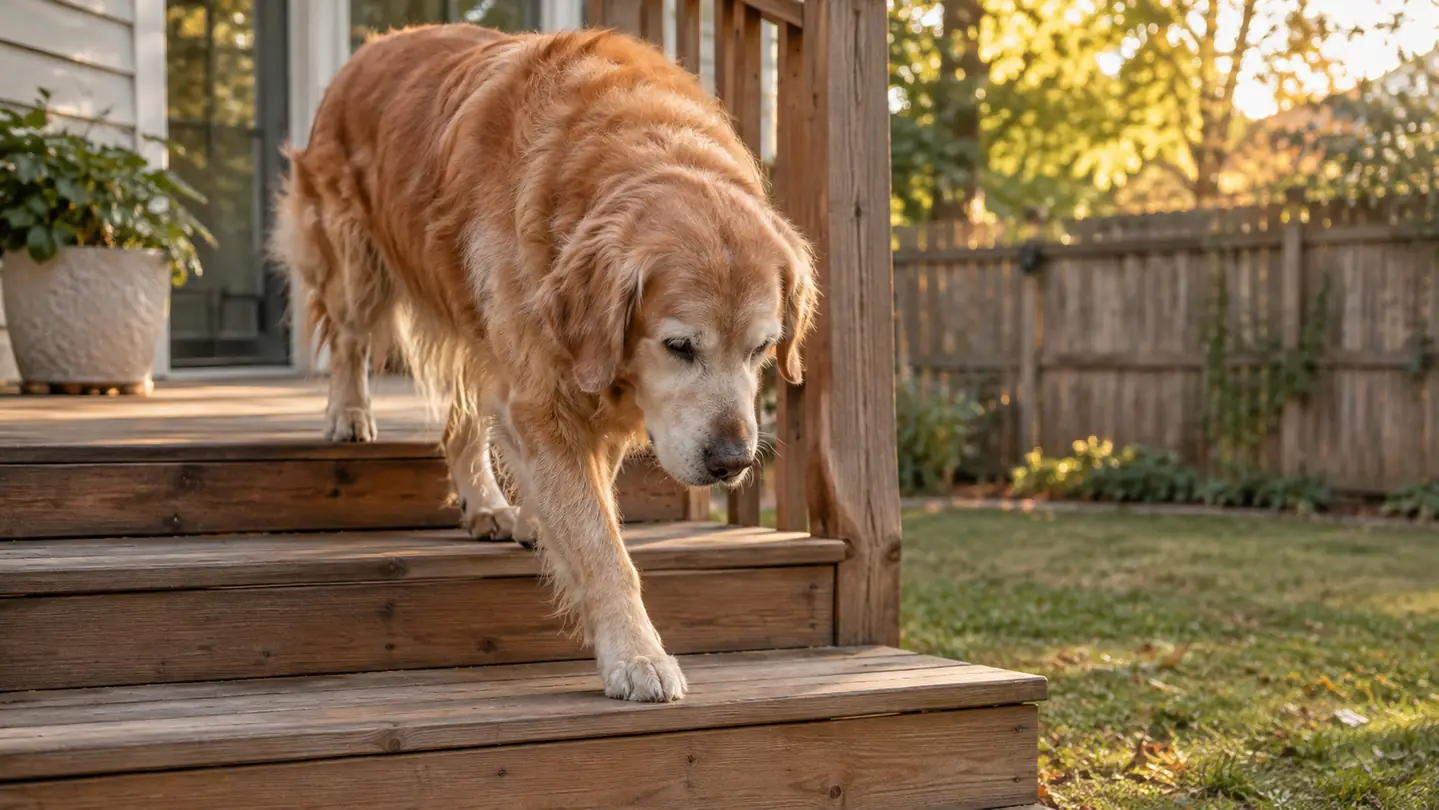
The short answer is that for Juniper, the brand was worth it. Not because the label is pretty, and not because I believe expensive always means better. The store-brand chew we tried for six weeks held her steady at first, then quietly stopped being enough. The difference showed up in small ways: slower to get up after a nap, that little hesitation at the three wooden steps down to the back yard, a pause before she jumped into the back of the SUV. Here is the honest breakdown of what I saw, what the labels actually say, and who I would tell to buy which.
How I Compared Them
Juniper is a 64-pound golden retriever mix who was diagnosed with arthritis in both hips around age ten. By the time we started supplements, she was stiff getting up after naps, slow on the back porch steps, and hesitant about jumping into the back of my mid-size SUV. Our vet recommended a joint supplement and named Cosequin first, but she was clear that the diagnosis and the dosing were her job, and that I should call her before changing anything. That call probably saved us a lot of trial and error.
I ran this the way I ran patient comparisons on the floor: same dog, same food, same routine, one variable at a time. We did six weeks on the Nutramax Laboratories chewable tablets, then six weeks on a store-brand glucosamine and chondroitin soft chew, then six weeks back on Cosequin. I kept a small notebook with dates, how long it took her to stand after a nap, whether she used both back legs evenly on the steps, and how easily she got into the SUV. It is not a clinical trial. It is one dog, one household, and a nurse's habit of writing things down.
Why those two? Because they were the two realistic choices in front of me. The store brand was the one the clerk pointed to when I asked what was cheaper. Cosequin was the one our vet named. The clerk meant well, and the bottle was not bad. It just was not the same product. I wanted to know if the difference was real or just marketing, so I tested both under the same conditions. That is the only way I know how to answer a question like this honestly.

What the Labels Actually Say
The Cosequin label names its forms. Glucosamine hydrochloride is listed as FCHG49 and sodium chondroitin sulfate is listed as TRH122. Those are the branded compound forms, and they are the forms used in a lot of the published research on joint supplements in dogs. The label also lists MSM, and the bottle is a 132-count of chewable tablets. Nutramax Laboratories has been in pet health for over 25 years, and Cosequin is described as the number one veterinarian recommended retail joint health supplement brand. That last part matters to me because it means veterinarians, the people who see the results, reach for it first.
The generic label told a different story. It said glucosamine and chondroitin, and it listed amounts, but it did not say which forms of those ingredients were inside, and it did not name a source. That is not automatically a problem. Some store brands are perfectly good, and the amounts on the label were in the same general range. But for me, the question was simple: if I cannot tell what form of the ingredient is in the tablet, I cannot compare it to the product that was studied. In nursing, we called that an unknown. You can work with an unknown, but you should know that is what you are working with.
| Cosequin (Nutramax Laboratories) | Generic Glucosamine and Chondroitin | |
|---|---|---|
| Active ingredients | Glucosamine HCl (FCHG49), sodium chondroitin sulfate (TRH122), and MSM in a chewable tablet | Glucosamine and chondroitin, sometimes with added MSM; forms and amounts vary by brand |
| Research backing | Uses the branded compound forms FCHG49 and TRH122, the forms used in published research | Usually does not state which compound forms are inside, so it is harder to compare to studies |
| Consistency | Same formula bottle after bottle, from a company with over 25 years in pet health | Store brands can change suppliers, so the formula can change without notice |
| Vet recommendation | The first brand our vet named, and the #1 vet recommended retail joint health brand | Sometimes suggested as a budget option for mild stiffness |
| Upfront cost | Higher | Lower |
| Best for | Dogs with diagnosed arthritis who need a known, consistent formula | Younger dogs or mild stiffness where budget matters most |
How I Gave It and What I Watched
Juniper got her chewable tablet with her evening meal, following the amount our vet confirmed for her weight. I broke it into pieces and tucked them into her food, which is the only way I could be sure she actually swallowed them. She never fussed about it. The tablet is small and seems to smell agreeable enough that she ate it without a fight. For a dog who has never been easy with pills, that was a relief, because a supplement only works if the dog actually swallows it every single day.
What I watched was simple: how she got up from the floor, how she took the three wooden steps into the back yard, and whether she jumped into the SUV or waited for me to lift her back end. I also watched for anything that worried me, because no supplement is risk-free and every dog is different. If a dog seems off after starting something new, that is a call to the vet, not a reason to push through. I kept that in mind the whole time we tried both products.
Where Cosequin Wins
The biggest difference I found was not the name on the bottle. It was knowing what was actually in the tablet, and knowing it would be the same next month. Cosequin lists glucosamine hydrochloride as FCHG49 and sodium chondroitin sulfate as TRH122, the forms used in published research, and the label is consistent bottle after bottle. That consistency matters more for a senior dog than for a puppy. Juniper's joints are not going to get better on their own. What we are doing is giving her body the same raw materials, every day, and hoping to slow the wear. A formula that changes between bottles works against that.
The second thing I noticed was the pattern when we switched. Juniper did well on the Nutramax Laboratories tablets. When we moved to the generic, she was fine for the first few weeks, then slowly got stiffer again. Same food, same routine, same everything except the supplement. When we went back to Cosequin, she improved again within a couple of weeks. I cannot tell you the generic was the cause. One dog is not a study, and I would never claim that. But the pattern was clear enough that I stopped experimenting. With arthritis already in both hips, I did not want to gamble a month of her comfort on a bottle that might not match the last one.
There is also the question of trust that comes from history. Nutramax Laboratories has been making pet supplements for over 25 years, and Cosequin is the number one veterinarian recommended retail joint health supplement brand. That does not mean every other product is bad. It means this is the one veterinarians see working often enough to keep recommending. When I was a nurse, I learned to pay attention to what the surgeons reached for first. Same idea.
Where a Generic Wins
Let me be fair, because I almost bought the generic myself. The upfront cost is lower, and for some dogs a generic glucosamine and chondroitin supplement is plenty. If your dog is younger, has only mild stiffness, or is starting joint support as a preventive, a store brand may do the job at a lower price. Our vet said as much: for mild cases, the most important thing is that the dog gets a reasonable daily amount of the right ingredients. That can absolutely happen with a less expensive product, and I have recommended that to friends with younger dogs.
The catch is that generics are not one thing. They are dozens of different products under different store labels, and they vary in ingredient amounts, forms, and quality. Some are perfectly good. Some are mostly filler. There is no way to know from the front of the bottle, and the back of the bottle does not always tell you either. That is the trade. You trade some certainty for a lower upfront cost. For a young dog with no diagnosis, that can be a reasonable trade. For Juniper, with arthritis already in both hips, I wanted the certainty more than I wanted the savings.
If you do go the generic route, there are ways to be a smarter shopper. Look for a product that lists actual amounts of glucosamine and chondroitin, not just a blend. Check whether the label names the compound forms. Ask your vet if the dose on the bottle makes sense for your dog's weight. And give whatever you choose a fair trial of at least four weeks before you judge it. The worst outcome is not picking the cheaper bottle. The worst outcome is picking one, seeing no result, and assuming supplements do not work at all.
The brand our vet named first, and the one that held Juniper steady
If your dog has a diagnosis, or is getting slower in ways you can see, a known formula with named ingredients is worth starting with. Cosequin is the brand we used, and the one I would buy again.
Amazon Check Today's Price on Amazon →Who Should Buy Which
Buy Cosequin if your dog has been diagnosed with arthritis, if you have watched them hesitate on the stairs or at the back of the SUV, or if you want a supplement from a company with over 25 years in pet health and a formula that names its ingredients. Buy a generic if your dog is young, has no diagnosis, and you and your vet have agreed that a basic daily joint supplement is enough. And either way, talk to your vet first. The diagnosis matters, and so does the dose. A supplement is not a replacement for veterinary care, and it is not a cure. It is one part of keeping a senior dog comfortable.
One more thing I would tell any owner: give it time and keep notes. Joint supplements do not work overnight. We saw the clearest difference at about six weeks, and the real proof came when we tried to switch. Whatever you choose, pick one product, use it consistently, and write down what you see. That notebook is what let me give our vet a straight answer when she asked how Juniper was doing. It is also what convinced me that the brand was worth it for Juniper, and that the generic was a fine choice for a different dog. And if you are not sure which camp you are in, that is exactly what your vet is for.
Start with the formula you can count on
If you are standing in that aisle the way I was, start with the brand your vet would name. Cosequin is what worked for Juniper, and it is the one I would choose again.
Amazon Check Today's Price on Amazon →