

I am a retired registered nurse. For 30 years I worked orthopedic and rehab floors, so I spent my career watching people recover from joint replacements, fractures, and the slow wear of arthritis. I learned to notice the small things: the pause before someone stands, the way they favor one side, the hesitation on stairs. When my own dog Juniper started showing those same signs, I did what I always did. I watched, I took notes, and I called our vet.
Juniper is a 12-year-old golden retriever mix, about 64 pounds. She was diagnosed with arthritis in both hips around age 10. She gets stiff after naps, she takes the back porch steps slowly, and she started hesitating before jumping into the back of our SUV. Our vet suggested we try Nutramax Laboratories Cosequin, and she has been on it for eight months now, apart from one six-week stretch when we tried a store brand. This is the honest version of what I noticed, what I did not notice, and what I think you should know before you buy it.
The Quick Verdict
It helped Juniper get up more easily and take the porch steps with less hesitation, but it was not a cure and it took about six weeks before I saw a real difference.
Amazon Check Today's Price →The daily joint support our vet recommended and we still buy
Nutramax Laboratories Cosequin is the chewable tablet Juniper has taken most mornings for eight months. It will not undo arthritis, but it made her mornings noticeably easier.
Amazon Check Today's Price on Amazon →How I Have Used It
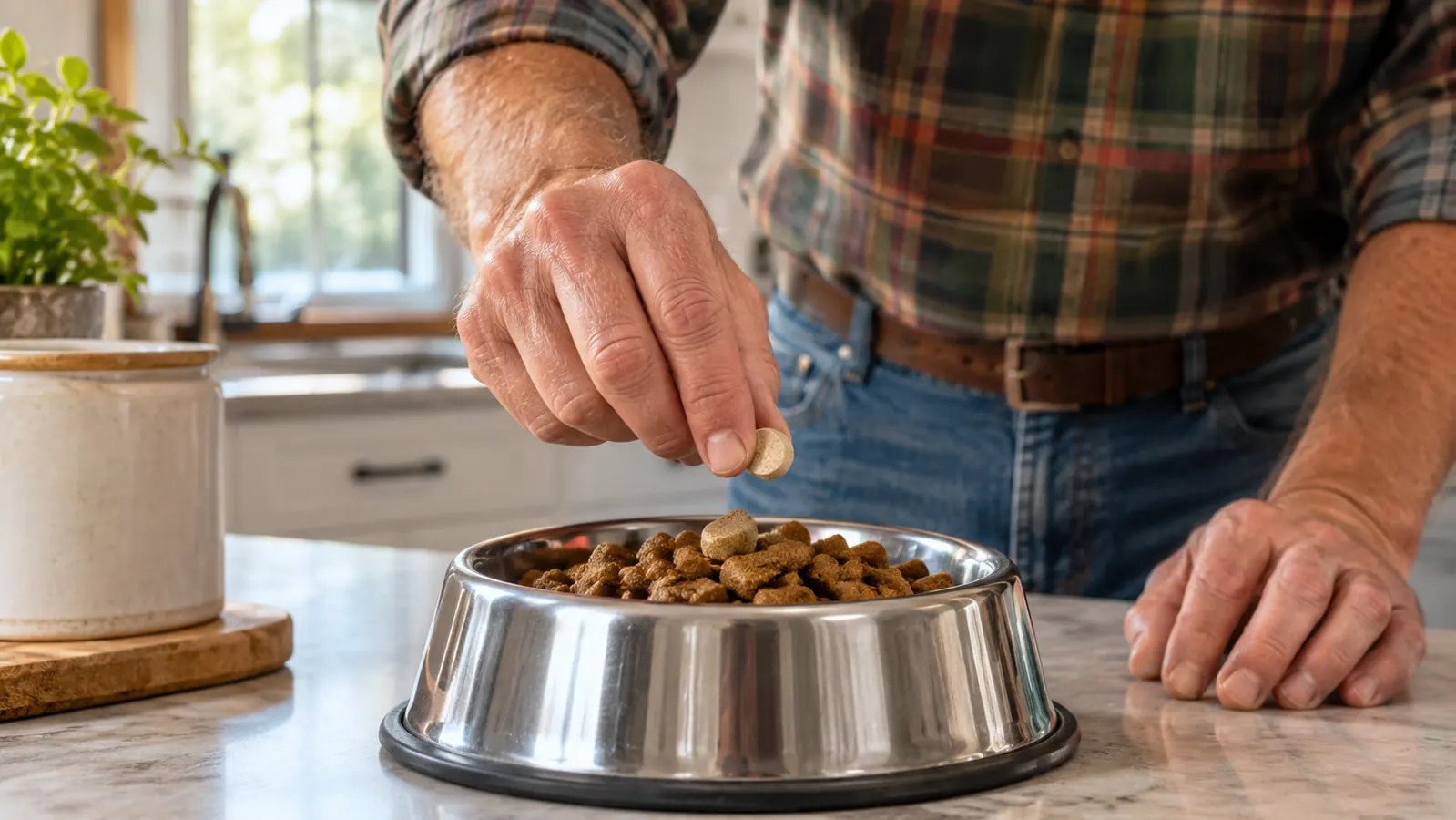
I give Juniper one chewable tablet in the morning with her breakfast. The tablets are small enough that she eats them right out of my hand, which matters because she is a picky eater. Some mornings I crumble one over her food, and she finishes the bowl either way. I have never had to wrestle her for it, and I have never had a day where she refused to eat afterward. The tablet has a mild smell, nothing like the fish-oil supplement we tried a few years ago, and it does not leave a mess on my fingers. That sounds like a small detail, but when you give something every single day, the small details are the ones you live with.
That was not how we started, though. The first week, I tried hiding the tablet in a spoonful of peanut butter, the way I used to help families give pills to a parent who could not swallow them. Juniper licked every bit of the peanut butter off and left the tablet sitting on the kitchen floor, looking at me as if I had made an error. I tried crumbling it into her food next, and that worked, but I noticed she sometimes left a few crumbs at the bottom of the bowl. On the third morning I offered it to her straight from my hand, and she took it like a treat. That is the method we have used ever since. It sounds like a small thing, but when you are giving something every single day for months, the method is the difference between a routine and a battle.
The bottle we buy is the 132 count size, so it lasts a little over four months at one tablet a day. I keep it on the kitchen counter next to my own medication bottle, and it has become part of our morning, like coffee or the news. I do not pretend that routine is hard. The harder part was waiting to see if it actually did anything. Our vet set the expectation from day one. She told me that supplements like this do not work overnight and that the benefit builds over weeks. She also told me to keep a simple record of what I saw, because our memories play tricks on us. So I did. I wrote down the date we started, how long it took Juniper to get up from her bed, and whether she hesitated at the top of the porch steps. I kept that notebook in the kitchen drawer, and every morning after breakfast I wrote one line. It felt like overkill at the time. It turned out to be the most useful thing I did, because six weeks later I could look back and see the change on paper before I trusted it in my memory.
What I Noticed After Eight Months
The first honest thing I can tell you is that I did not see a difference in the first two weeks. Juniper was still stiff after her long naps, and she still took the porch steps one careful paw at a time. On the tenth day I wrote in my notebook: no change, and I underlined it. I almost stopped the supplement then. The bottle was sitting on the counter, and I remember thinking that we were spending money on something that was not doing anything. But our vet had warned me that would happen, so I kept going. I am glad I did, but I want you to know that the first two weeks are discouraging, and you should plan for that.
The change showed up somewhere between week five and week seven. I noticed it on a Tuesday morning, about six weeks after we started. Juniper got up from her bed, and she did not do the little rock-and-roll motion she had been doing for months. She just stood up. It was not a dramatic moment. There was no running, no jumping, no tail spinning in circles. She simply got up like a normal dog, walked to her water bowl, and drank. I stood in the hallway and cried a little, because that is what you do when you have been watching your dog struggle and then, without warning, she does not. I went to the kitchen drawer, pulled out the notebook, and wrote: stood up normally this morning. Three weeks earlier I had written: rocked twice before standing. That contrast on paper meant more to me than any feeling.
She did not start running again. She started getting up without the rock-and-roll motion, and that was enough for me.
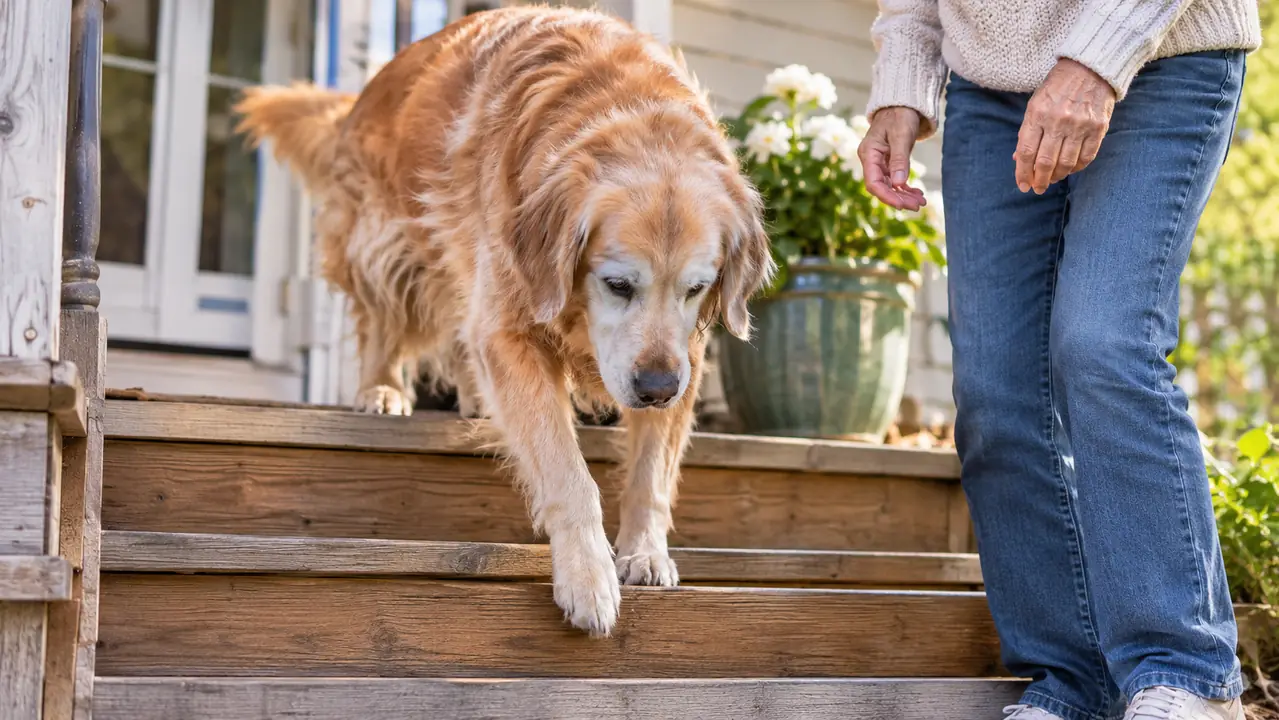
The porch steps improved too, though more slowly. We have three wooden steps down to the back yard, and before Cosequin Juniper would stop at the top, brace herself, and then go down one paw at a time, pausing on each step. By month three she still took them one at a time, but she no longer stopped at the top to brace herself. She goes down them like she is not thinking about them, which is exactly what I wanted. I have watched her do it a hundred times since, and I still notice it every time. The SUV is a different story. She still hesitates before jumping into the back, and on cold mornings I still lift her rear end to help her in. That part has not changed in eight months, and I think it is important to say so. The supplement helped the stiffness after rest, but it did not give her back the confidence to leap.
What Nobody Tells You About Cosequin
The first thing nobody tells you is that it is a supplement, not a treatment. It contains glucosamine hydrochloride, sodium chondroitin sulfate, and methylsulfonylmethane, which are the ingredients listed on the label of the Nutramax Laboratories product. Those ingredients support joint health, but they do not repair cartilage that is already worn down. I explained it to myself the way I used to explain physical therapy to a patient's family: therapy does not undo the injury, it strengthens everything around the injury so daily life gets easier. That is the realistic way to think about this supplement. If your dog has significant arthritis, this is not going to undo it. It might make daily life more comfortable, and that is the goal.
The second thing nobody tells you is that you have to be patient and consistent. Missing a day here and there probably will not matter, but the benefit seems to build over time. I noticed the real change only after about six weeks of daily use. I also noticed that a long stretch of cold, rainy weather set her back a little, and then she improved again when the weather turned. That told me the supplement was not a switch. It was more like a slow climb, with weather and activity pushing it up and down. If you try it for ten days and give up, you will not know whether it works for your dog. Give it a full two months, keep a simple record, and then decide.
The third thing is that it will not fix every mobility problem. Juniper still hesitates before jumping into the car. She still walks more slowly on cold mornings. She still has arthritis, and she always will. What changed is the edge of it. The stiffness after rest is less, and the hesitation on the steps is less. That is a real improvement, but it is not a transformation. I say that because I have seen how easy it is to read a review like this one and expect too much. I do not want you to buy it expecting a different dog. I want you to buy it, if you buy it, expecting a slightly easier morning. That is what we got.
The fourth thing is about the tablets themselves. They are chewable, which is wonderful for a dog like Juniper who will eat anything. But if your dog is a gulper, watch them. Juniper chews hers, but I have seen dogs in my neighborhood swallow treats whole, and a tablet is not a treat. If your dog does not chew, you may need to break the tablet into smaller pieces or crumble it over food. I would also mention that I keep the bottle up on the counter, out of reach. A determined dog can get into a lot of trouble with a bottle of anything that smells edible, and I would rather be careful than sorry.
The Ingredient Story, in Plain Words
I am not a veterinarian, and I am not going to pretend to be one. But I spent 30 years reading medication labels and explaining them to families, so I will tell you what the label means in plain words. The active ingredients in Cosequin are glucosamine hydrochloride, methylsulfonylmethane, and sodium chondroitin sulfate. Glucosamine and chondroitin are building blocks that are naturally found in joint cartilage. MSM is a sulfur compound that is often included in joint support products. The idea is to give the body more of the materials it uses to maintain cartilage. The label also lists specific forms of two of those ingredients, glucosamine hydrochloride FCHG49 and sodium chondroitin sulfate TRH122. Those codes are the patented forms that the company says it uses, and they are part of why our vet mentioned this brand by name. I cannot verify the patents, but I can tell you that the label is specific about what is inside, and I respect that.
I want to be honest with you about what I cannot tell you. I cannot tell you exactly how much of the glucosamine and chondroitin actually reaches Juniper's joints. I cannot tell you that the science is settled, because it is not. I have read enough to know that studies on joint supplements in dogs come to different conclusions, and that the quality of the studies varies. What I can tell you is that our vet recommended it, that it is the brand our vet mentioned by name, that Nutramax Laboratories has been making pet supplements for over 25 years, and that the label says it is the number one veterinarian recommended retail joint health supplement brand. I cannot prove that claim, but I can tell you that when I asked our vet what she gives her own dog, this was the name she said. And I saw a change in Juniper that I did not see during the months before we started. That is the honest evidence I have.
Who This Is For
I think Cosequin is worth trying for a dog who is in the early or middle stages of joint stiffness. If your dog is a little slower to get up, a little more careful on the stairs, a little less eager to jump into the car, that is exactly the dog I would talk to your vet about. That was Juniper around the time of her diagnosis, before we started, and I wish we had started then instead of waiting until the stiffness was obvious every single morning. It is also a good fit if you are the kind of person who can give a supplement every day for two months before deciding whether it works, because that is the timeline that gave us our answer. If you need to see a difference in two weeks, this will frustrate you.
It is also a good fit if you want a chewable tablet that is easy to give. Juniper takes it like a treat, and I have never had to hide it in food. That matters when you are giving something every single day for months. The routine is simple enough that I have kept it up through travel, through a week when I was sick, and through the chaos of the holidays. I mention that because the best supplement in the world will not help if you cannot stick with it.
Who Should Skip It
If your dog is in significant pain, limping, or struggling to stand, do not start with a supplement. Start with a phone call to your vet. Supplements are not pain medication, and they are not a substitute for a proper diagnosis. If your dog is already on prescription pain medication, talk to your vet before adding anything else. I do not want anyone to read this and skip the vet visit because they think a chewable tablet will be enough. I have seen too many families in my nursing career wait too long before getting help, and I would rather you be annoyed by my caution than miss something important.
I would also say skip it if you are not willing to be patient. If you expect to see a difference in a week, you will probably be disappointed. And if your dog will not eat a chewable tablet, you will be fighting that battle every morning, which gets old fast. We got lucky with Juniper, but I have heard from a neighbor whose dog would not touch the tablet no matter what she hid it in. That dog is on a different product now, and that is fine. There is more than one way to support a senior dog's joints, and the right one is the one your dog will actually take and your vet actually recommends.
What I Liked
- Easy to give: Juniper eats the chewable tablet right out of my hand
- Our vet recommended it by name, and it is the same brand she mentioned for joint support
- I saw a real reduction in morning stiffness after about six weeks
- One tablet a day is simple to keep up with
Where It Falls Short
- It did not help with the hesitation before jumping into the SUV
- It took weeks before I noticed a difference, so it requires patience
- It is a supplement, not a treatment, and it will not repair joint damage
- The cost adds up over time
The same chewable tablet Juniper has taken most mornings for eight months
If your vet agrees it is worth trying, Nutramax Laboratories Cosequin is easy to give and easy to keep up with. Start it, be consistent, and give it a full two months before you judge it.
Amazon Check Today's Price on Amazon →