
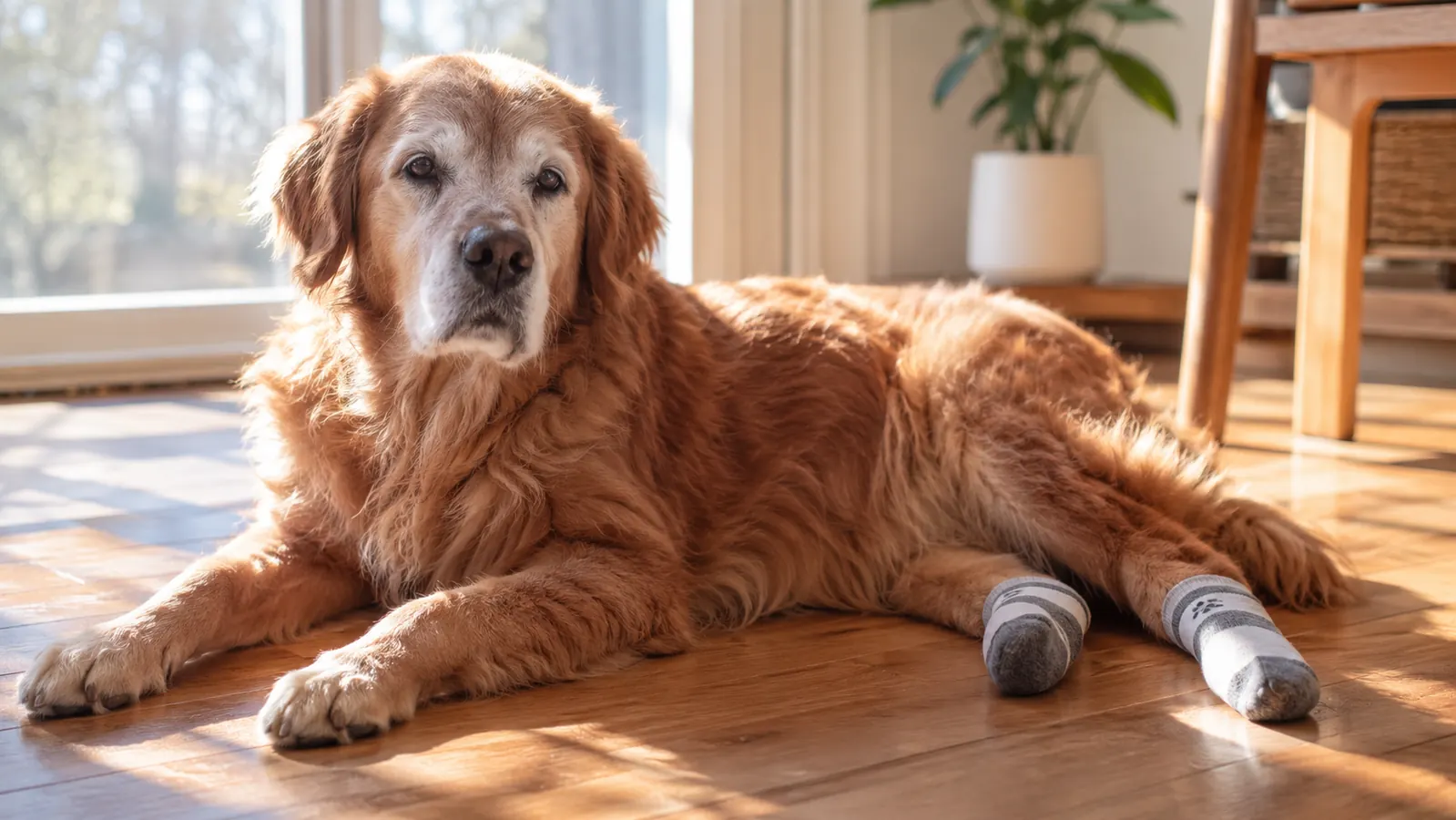
One afternoon I watched Juniper stand up from her nap and slide a little on the hallway hardwood, I started paying attention to her feet. She is a 12-year-old golden retriever mix, about 64 pounds, with arthritis in both hips that our vet diagnosed a couple of years ago. She manages well most days, but those first few steps after resting have always been the hardest for her. I spent thirty years working orthopedic and rehab floors as a registered nurse, and I know what weak footing does to an older body. When I saw DOK TigerToes dog socks, I ordered a set of the large size to see if they could give her back some of that confidence.
This is not a story about a cure. Juniper still has arthritis, and she still gets stiff when she first gets up. What I can tell you is what I observed over months of daily use on our hardwood floors, what I had to adjust, and who I think these socks are actually for. If you are weighing these for your own dog, I hope this helps you decide faster than I did.
The Quick Verdict
DOK TigerToes gave Juniper noticeably steadier footing on hardwood, stayed on better than I expected, and survived daily wear for months. Just measure carefully and expect to re-tighten them.
Amazon Check Today's Price →Give your senior dog steadier footing today
DOK TigerToes are the socks I kept reaching for during our hardwood-floor experiment. Check today's price on Amazon and see if they fit your dog's paws.
Amazon Check Today's Price on Amazon →How I've Used It
Juniper wears a large in DOK TigerToes, which the listing says fits paws 2.5 to 2.8 inches wide. I measured her front and back paws with a soft tape measure before ordering, because getting the size right is the difference between a sock that stays put and one that bunches. I ordered the large because Juniper's paws sit right in the middle of that range, and the fit has been snug without being tight. The set comes with four socks, so I had enough to cover her back paws with two left as backups.
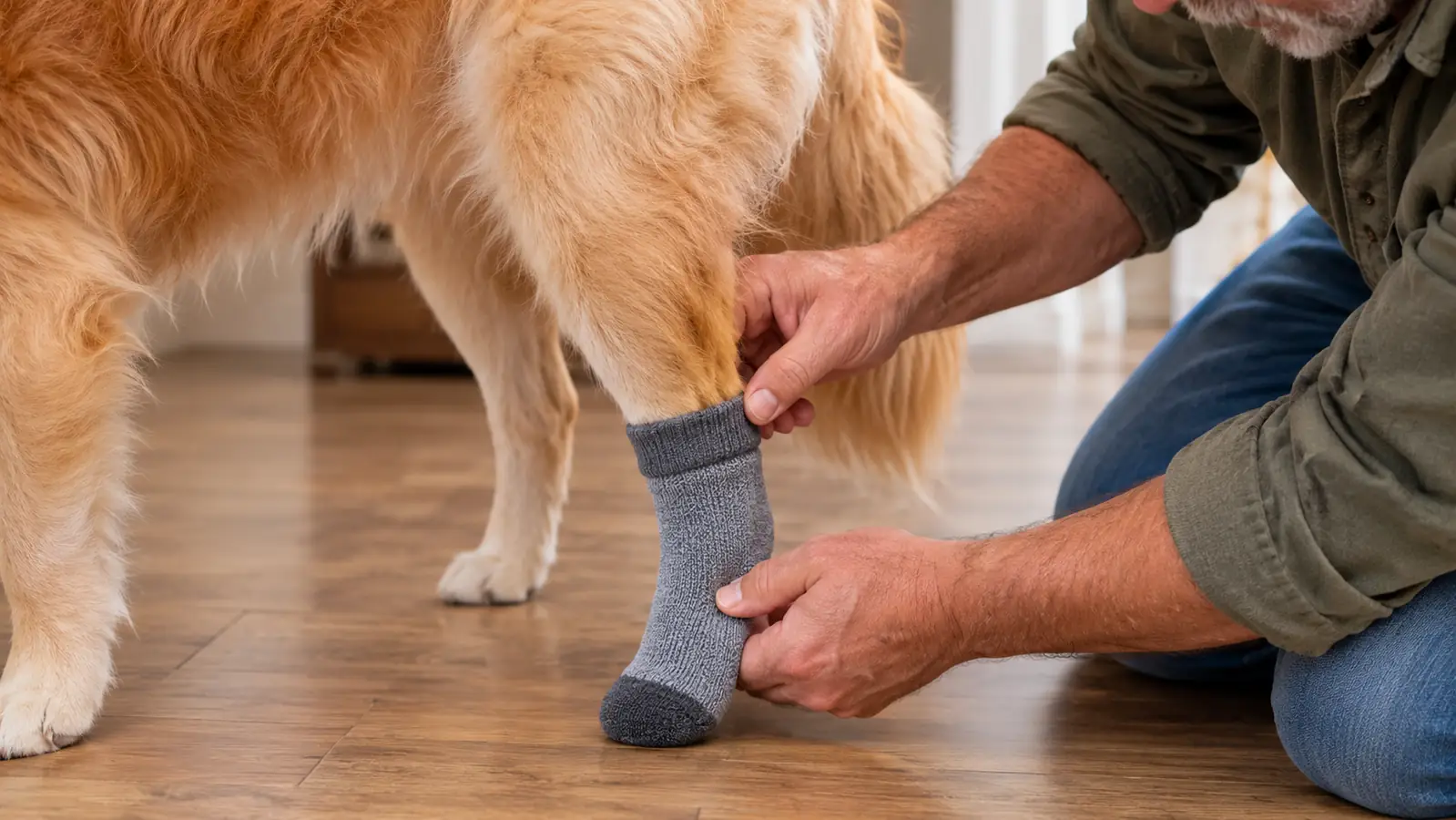
Our routine has been simple. On days when we spend time indoors on the hardwood, I put them on before she gets up from her first nap of the afternoon. The closure is a hook and loop strap plus a pull-on design, so they go on in about a minute once she is standing. I check the strap tension before she walks, and I usually re-tighten once or twice during a long stretch. The material is cotton and nylon, and I have machine washed them with her bedding on a gentle cycle without any shrinkage or fraying.
I kept a small notebook for the first two months. I wrote down how she walked from the living room to the kitchen, whether she hesitated at the doorway, and how often I had to fix a sock. That habit came from my nursing days, when we tracked a patient's gait the same way. It helped me see patterns instead of just impressions. By the third week, my notes showed a clear pattern: on days she wore the socks, she crossed the hallway without pausing at the rug edge. On the two days I skipped them because we were heading out, she did her old shuffle. That contrast is what convinced me the socks were doing real work, not just making me feel better about the situation.
One thing I want to be honest about: the first week took some patience. Juniper walked like she was wearing snow boots for a day or two, lifting her feet higher than usual. I almost gave up on them. But by the end of the first week, her gait settled back to normal, and the socks became just part of the routine. If your dog acts odd for the first few wears, give it a little time before you decide.
Why I Reached for These Socks
The main reason I chose DOK over the other options I saw was the grip. The listing says the performance grip is engineered to provide traction even if the sock twists while the dog is using them, and that mattered to me because Juniper does not always walk in a straight line. She has a slightly uneven gait from her hips, so her back paws tend to scuff sideways. A sock that only grips when it is perfectly aligned would not help her.
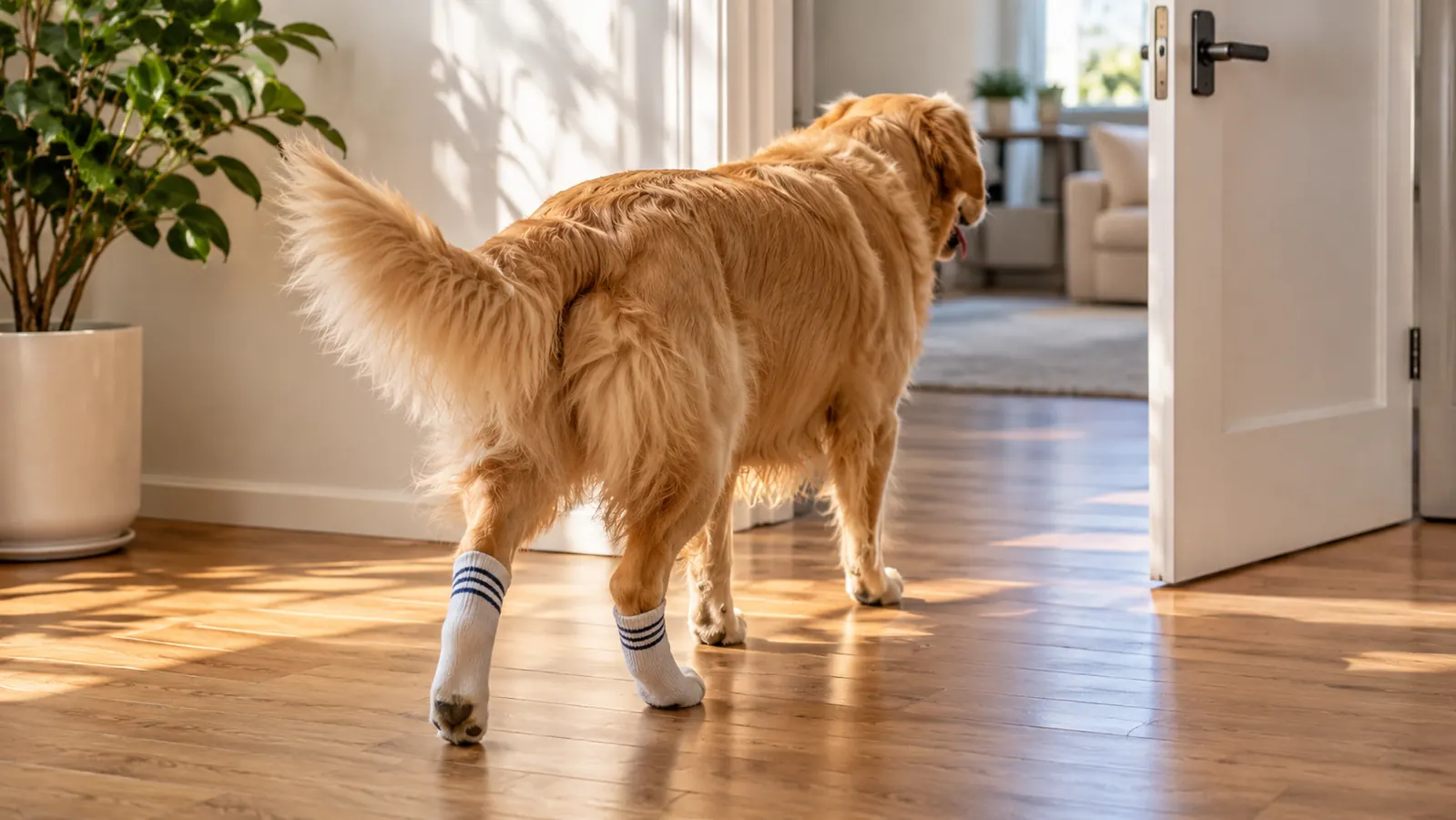
In practice, the extra-thick grip pads held up well. I could hear the difference when she walked: a soft, confident step instead of the little skid I had gotten used to. She still moved slowly, but she stopped doing that hesitant shuffle at the edge of the rug. That may sound like a small thing, but for an older dog, that hesitation is often the first sign that she is losing confidence in her footing.
I also appreciated that these are specifically designed with senior pet owners in mind. The brand says so on the listing, and the design reflects it. The closure is easy for someone with arthritic hands to manage, and the socks are thin enough that Juniper does not seem to notice them after a minute or two. She is not a dog who tolerates fussy gear, and she stopped trying to pull them off by the second day.
I also compared them to the other non-slip options I found online. Some were just rubber bands that slip over the paw, and others were full booties that seemed heavy for indoor use. What I liked about the TigerToes design is that it covers the paw without adding bulk. Juniper could still feel the floor through them, which I think is important for a dog's balance. A thick boot can actually make an older dog more unsure, because they lose the sensory feedback from their pads.
How They Held Up Over Time
After about six weeks of daily use, I expected the grip to wear down or the seams to fray. Neither happened. The hook and loop closure still catches firmly, and the cotton and nylon fabric has not pilled or stretched out of shape. I have washed them at least a dozen times, and they come out looking much the same as the day they arrived. I checked the stitching around the toe area especially, because that is where I would expect the first signs of wear.
The one thing I did notice is that the socks work best when they are clean. Dirt and hair collect on the grip pads, and when they get dirty, the traction drops. I started rinsing them after any trip outside and giving them a proper wash every week or so. That kept the grip performing the way it did on day one. The machine wash care instruction on the listing held up: cold water with her bedding, laid flat to dry, and the hook and loop closure still catches cleanly after more than a dozen washes. The set weighs 3.53 ounces, light enough that Juniper never seemed to feel them, which matters for a dog who already carries herself carefully.
I also learned to keep a spare sock handy. Juniper has never managed to get one off by herself, but the hook and loop strap can work loose after a long walk, and I have had to re-secure it mid-day. That is not a flaw so much as a reality of putting socks on a dog who likes to drag her back feet a little.
I want to note that I have only used these on hardwood and on the short walk from the back door to the yard. I have not used them for long outdoor walks, because the listing describes them mainly for indoor protection and paw protection, and I did not want to push them past what they are designed for. On the surfaces we use them on, they have been dependable.
The One Thing That Surprised Me
What surprised me most was how quickly Juniper accepted them. I have seen dogs fight every piece of gear you put on them, and I braced for a week of negotiation. Instead, she stood still while I fastened the first sock, sniffed it once, and then walked off like she had been wearing socks her whole life. By the third day, she would lift her paw when I reached for it.
The other surprise was how much her confidence improved beyond just the floors. She started walking more willingly to her food bowl, and she stopped bracing herself at the top of the three wooden steps down to the back yard. I noticed it one Tuesday morning when she walked straight past the top step without pausing to line herself up, something she had done every morning for months. I wrote "no hesitation at the top step" in my notebook that day, and it stayed true for the rest of the month. That was the moment I stopped thinking of the socks as a maybe and started treating them as part of her routine. The socks did not fix her hips, but they removed one more thing for her to worry about. For a dog her age, that matters.
What It's Like Living With Them
The biggest adjustment for me was remembering to put them on before Juniper needed them, not after. In the beginning, I would wait until I saw her slip, and by then she was already nervous about walking. Now I keep them in a small basket by the back door, next to her leash and her joint supplement. When I see her start to stir from a nap, I grab them before her feet touch the floor.
I also learned which moments matter most. The first few steps after lying down are when Juniper is at her wobbliest, so those are the minutes the socks earn their keep. Once she has walked a bit and her muscles warm up, she is steadier on her own. The socks are not a constant need; they are a tool for the times when her body is still waking up. I have also learned to check the floor for small objects before she walks, because a sock can hide a pebble that would bother her. And I have learned to put them on in the same order every time, starting with the same paw, because Juniper stands more patiently when she knows what is coming next. Routine matters to an old dog, and it turned out to matter to me too. The whole process takes less than a minute now, and it is the calmest minute of our afternoon.
What I Liked
- Extra-thick grip that held up to months of daily use
- Stays on well, even with a dog who scuffs her back paws
- Machine washable without shrinking or losing traction
- Hook and loop closure is easy to adjust and re-tighten
- Four socks in a set, so you have backups
Where It Falls Short
- You must measure paws carefully; the size range is narrow
- Hook and loop strap can work loose during long walks
- Grip needs regular cleaning to keep performing
- Not a substitute for a vet's diagnosis or treatment plan
The first time I heard Juniper's step land without that little skid, I knew the socks were doing their job.
Who This Is For
DOK TigerToes are for dogs who live on hardwood, tile, or laminate and have started to look unsure on their feet. If your dog is older, has hip or joint issues, or simply slides when they try to turn quickly, these socks can give them back some of that sure-footedness. I would also recommend them for anyone whose dog licks or chews at their paws, since the socks provide a layer of protection while they heal.
They are especially useful for the in-between moments: the first steps after a nap, the walk from the living room to the back door, the turn at the end of the hallway. That is where Juniper needed the most help, and that is where I saw the biggest difference.
If you have a younger dog who is already steady on their feet, you may not see much difference. These are not a fashion accessory or a way to make a healthy dog more comfortable. They earn their place when there is a real need: age, joint stiffness, or a slippery floor that makes your dog hesitate. For that specific situation, they are worth trying.
Who Should Skip It
If your dog has an open wound, a skin infection, or a paw injury, talk to your vet before putting socks on. A sock can trap moisture and make some conditions worse. And if your dog absolutely will not tolerate anything on their feet, no amount of grip will help if you cannot get the sock on in the first place.
I would also say this: if you are looking for a fix for hip arthritis itself, socks are not it. They address the symptom of slipping, not the underlying joint pain. Juniper still needs her joint care routine, her slow walks, and her ramp for the SUV. The socks are one part of a bigger plan, not the whole plan.
And if you are hoping for a product that will let you stop supervising your dog's movement entirely, these are not that either. I still watch Juniper when she walks, and I still help her on the steps when she needs it. The socks reduced the slipping, but they did not change the fact that she is a senior dog who needs a little help. That is the honest version.
Steadier footing starts with the right sock
After months of daily use, DOK TigerToes are still the ones I put on Juniper first. Check today's price on Amazon to see if they are right for your dog.
Amazon Check Today's Price on Amazon →