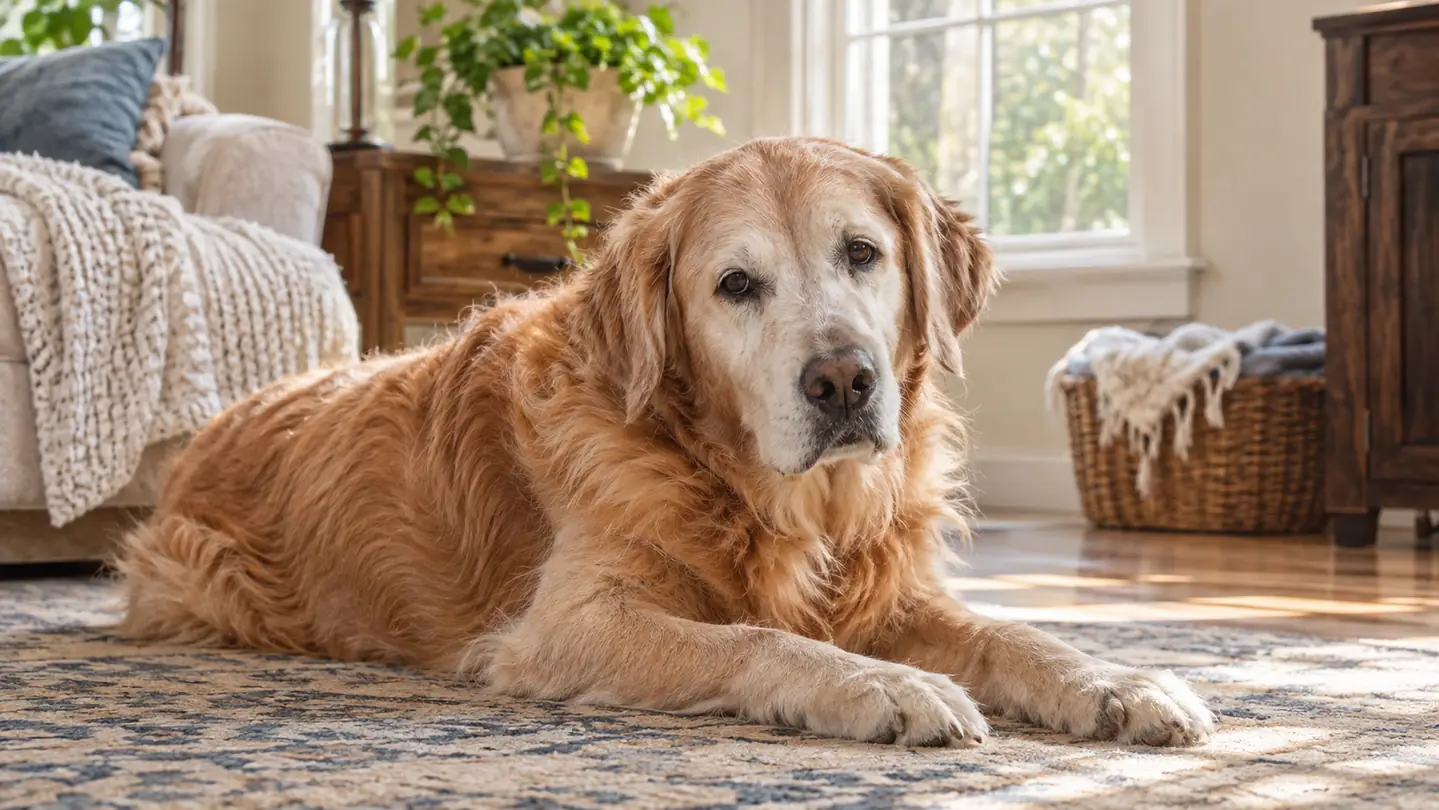
The first thing I noticed with Juniper was the pause. She would wake from a nap, look at me, and take a breath before she pushed herself up. Not a whimper, not a limp, just a pause that got a little longer each month. Our vet said what I already suspected: arthritis in both hips, diagnosed when she was about ten. By the time she turned twelve, the three wooden steps down to the back yard took twice as long, and the back of the SUV had become a negotiation. This is the routine we landed on, step by step, and the one I would walk a friend through at the kitchen table.
I spent thirty years on orthopedic and rehab floors, so stiff joints are familiar territory. A dog is not a person, but the same principles apply: keep the joint moving, keep the weight off, and support the cartilage before pain convinces the dog to stop moving altogether. That is why we started Nutramax Laboratories Cosequin chewable tablets. I am not a vet, and nothing here replaces one. This is what worked for Juniper, with our vet's guidance, and it is a reasonable place for you to start the conversation with your own.
Start with the supplement vets recommend most
Nutramax Laboratories Cosequin chewable tablets support joint health with glucosamine hydrochloride, MSM, and sodium chondroitin sulfate. It is the #1 vet recommended retail joint health supplement brand, and it is the one our vet suggested we try first.
Amazon Check Today's Price on Amazon →Step 1: Talk to your vet before you change anything
Before I put anything in Juniper's bowl, we had a conversation with our vet. Stiffness in an older dog is usually arthritis, but it can also be a soft tissue injury, a neurological issue, or something else entirely. Our vet watched Juniper get up from the floor, walk across the exam room, and go down the single step at the door. That exam told us more than any internet search could. A sudden refusal to use a leg is an emergency, not a supplement conversation. The first step is a physical exam and a straight answer about what you are actually dealing with.
Ask your vet two questions while you are there. First, is a joint supplement appropriate for this dog? Second, what dose? The Cosequin label has a chart based on weight, and our vet confirmed the amount that was right for Juniper at 64 pounds. Do not guess, and do not borrow a friend's bottle. The right starting point depends on the dog's weight, the stage of the arthritis, and what else she is taking. A supplement that helps one dog can be the wrong amount for another.
One more thing I always tell people: write down what the vet says. When you are standing in the exam room with a wiggly dog, half of it goes in one ear and out the other. A note in your phone is enough. You will want it later, when you are trying to remember whether the vet said to give it once a day or twice, and whether to check back in six weeks or three months.
Step 2: Start Cosequin and give it time to build up
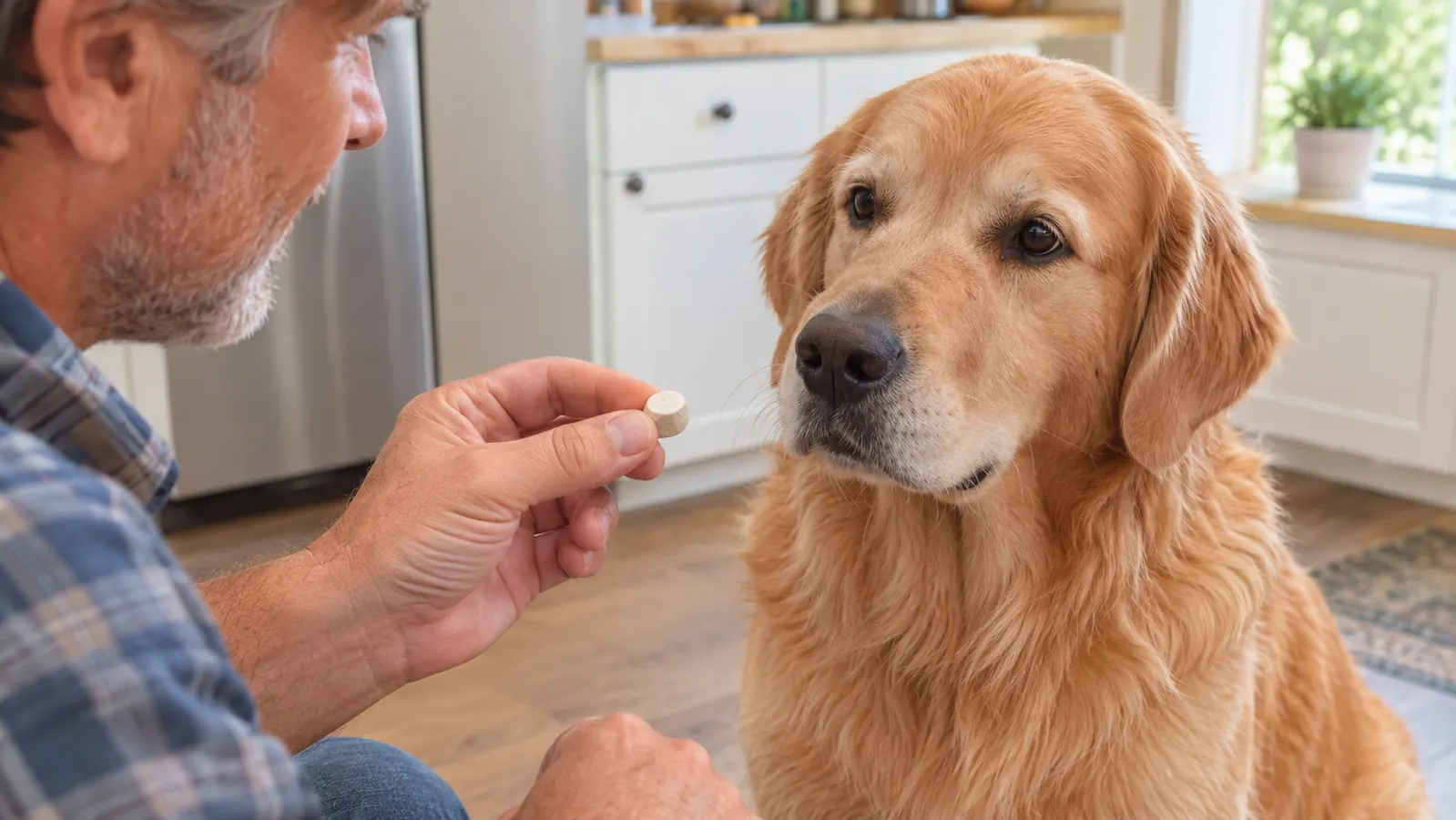
Cosequin is a chewable tablet, and Juniper takes it with breakfast without a fight. I break it in half and tuck it into a small piece of plain chicken, which is how I get her to take anything she is unsure about. The active ingredients are glucosamine hydrochloride, methylsulfonylmethane, which everyone calls MSM, and sodium chondroitin sulfate. These are the building blocks that support joint cartilage. Nutramax Laboratories has been making pet supplements for over 25 years, and Cosequin is the #1 vet recommended retail joint health supplement brand.
Here is the part most people do not want to hear: it does not work overnight. Joint support supplements build up in the system over weeks. We did not see a different dog on day three. We saw small changes over the first month, and the real difference showed up around six weeks. For Juniper, the first change was the pause. It went from a breath and a rock back and forth to just a breath. Then she stopped hesitating at the top of the porch steps. Consistency matters more than anything. Give it the same way, at the same time, every single day.
If you miss a day, do not double up the next day. Just get back on schedule. And if you are already giving another glucosamine product, talk to your vet before stacking them. More is not better when it comes to supplements. Write the start date on the bottle so you know when six weeks is up. That is the moment to judge whether it is helping.
Step 3: Make the house easier to move around in
Our house is a single story, which is lucky, but the living room and hall have hardwood floors. Hardwood is beautiful and it is also slick. Juniper's back end would slide out from under her when she stood up quickly, and a dog who falls stops wanting to get up. We put runners down in the hall and a large rug in the living room, and it made an immediate difference. If you have slick floors, traction is the cheapest thing you will do for a stiff dog. It helped her more in the first week than any bottle of anything.
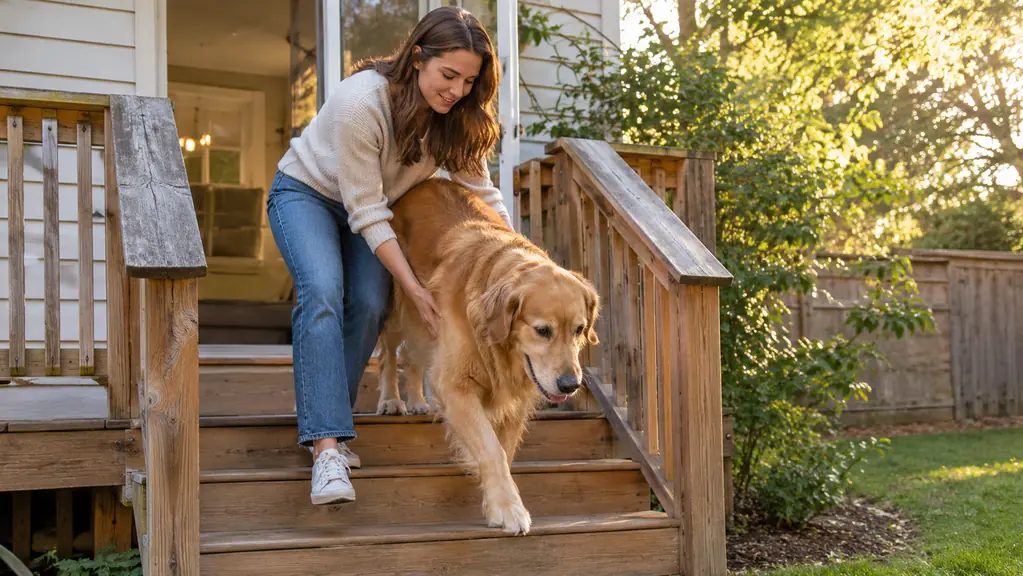
The three steps down to the back yard were another trouble spot. We added adhesive treads to the wood, and I slow down and let Juniper set the pace. She goes down one step at a time now, and she does not wait at the top the way she used to. It sounds small, but a dog who trusts her footing moves more, and a dog who moves more keeps her joints going. I also stopped calling her from the yard when she was at the far end. Now I walk out to meet her, so she does not rush a climb she is not ready for.
Her bed is low to the ground and easy to step out of, and I keep her food and water close enough that she does not have to cross the whole house, but not so close that she stops walking entirely. Every step she takes on her own is a step that keeps her hips working. If your dog sleeps in your room, a second low bed there can save her a trip down the hall in the middle of the night.
Step 4: Adjust walks and exercise to what she can do today
We used to do one long walk in the morning. Now we do two shorter ones, one in the morning and one in the late afternoon. Short, frequent movement beats one long walk that leaves her sore for two days. I let Juniper set the pace, and I turn around before she is exhausted, not after. A tired stiff dog is a sore stiff dog tomorrow. In the winter, I let her do a few slow laps around the living room before we head out, so she is not stepping onto cold pavement with cold joints.
For the SUV, I keep a folded towel in the back. I put it under her belly like a sling and lift her rear end while she puts her front paws in. She still hesitates at the hatch, but she does not need to be lifted all the way anymore. If your dog is smaller, a ramp can work; for Juniper, the towel sling is what we use. The important part is that she still does the part she can do. The front paws going in on her own keep her shoulders and her confidence working.
The worst thing for stiff joints is a week of stillness followed by a sudden burst of activity. Keep the movement gentle and daily. If your vet has suggested swimming or physical therapy, that is excellent, but a few short walks a day is a solid start for most dogs. The goal is not distance. The goal is that she moves a little, every day, without pain the next morning.
Step 5: Track what changes and what doesn't
I kept a simple log for the first six weeks. Not a spreadsheet, just a notebook on the kitchen counter. Each day I noted how long it took Juniper to stand up after a nap, whether she used the steps without waiting, and whether she needed help getting into the SUV. I gave each one a yes or no, and I dated it. It took thirty seconds a day. Looking back, those thirty seconds were the most useful part of the whole routine.
What changed: the pause before she stood up got shorter. She stopped waiting at the top of the porch steps. She started putting her front paws in the SUV without being coaxed. What did not change: she still does not jump into the back in one clean move, and I still help her rear end. That is okay. The goal was never to make a twelve-year-old dog act like a puppy. The goal was to make her comfortable moving. If you expect a dramatic turnaround, you will be disappointed, and you will miss the small wins that are actually worth celebrating.
Bring the log to your recheck appointment. Our vet could see the difference in Juniper's gait, and the notes helped us decide what to keep doing. If you track nothing else, track whether your dog is getting up more easily and moving more willingly. Those two things tell you more than any number. And if the log shows no change after six or eight weeks, that is not a failure. That is information to take back to the vet, who may suggest a different approach.
What Else Helps
A joint supplement is one piece of the puzzle. Weight is the other big one. Every extra pound is extra load on arthritic hips, and Juniper is at a good weight at 64 pounds. We measure her food and she gets treats, but we count them in her daily total. If your dog is carrying extra weight, ask your vet about a plan before you change anything on your own. Losing a pound or two can matter more to a stiff dog than any supplement on the shelf.
Warmth helps too. Juniper is more comfortable on a warm bed in a warm room, and she is noticeably stiffer after a cold night. Gentle massage and slow range of motion exercises can help, and as a nurse I can tell you the approach is to go slow and stop if the dog pulls away. And be honest with yourself about pain. Cosequin supports joint health, but it is not a painkiller. If your dog is whining, flinching, or refusing to move, that is a vet visit, not a supplement adjustment.
Two smaller things made a real difference for us. I keep Juniper's nails short, because long nails change the way a dog stands and make her more likely to slip on the hardwood. And I asked our vet about omega-3 fatty acids, which many vets recommend as part of a joint care plan. We added it the way our vet suggested, not the way the internet suggested. Your vet may recommend something different, and that is exactly who should decide.
The change was not dramatic. It was a shorter pause before she stood up, a steadier walk down the steps, a dog who stopped dreading the back of the SUV. That is what six weeks of consistency looked like for us.
Every dog is different, and every household is different. What worked for Juniper may not be exactly what your dog needs, but the shape of it is usually the same: a vet visit, a consistent supplement, a safer house, gentler exercise, and a simple log. Give it six weeks before you judge it. That is the advice I would give my own sister, and it is the advice I am giving you.
Give your senior dog the same six weeks
Nutramax Laboratories Cosequin chewable tablets are the #1 vet recommended retail joint health supplement brand. Confirm the dose with your vet, give it time, and keep moving with your dog.
Amazon Check Today's Price on Amazon →